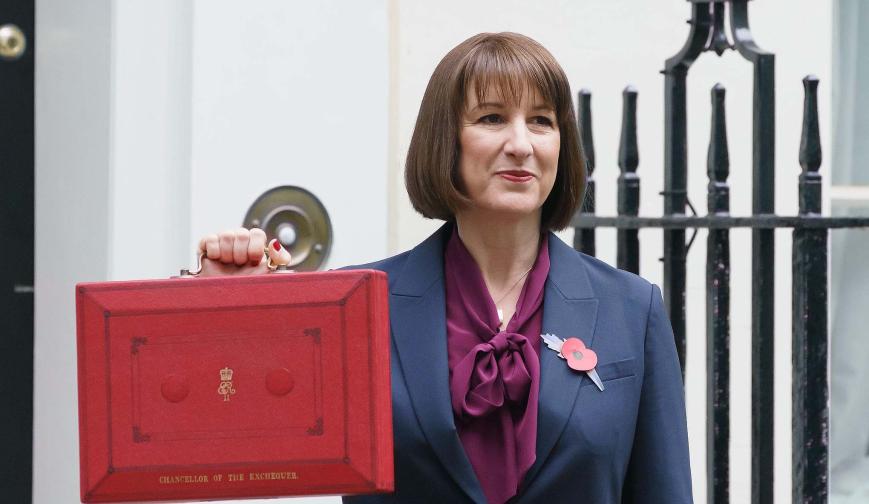
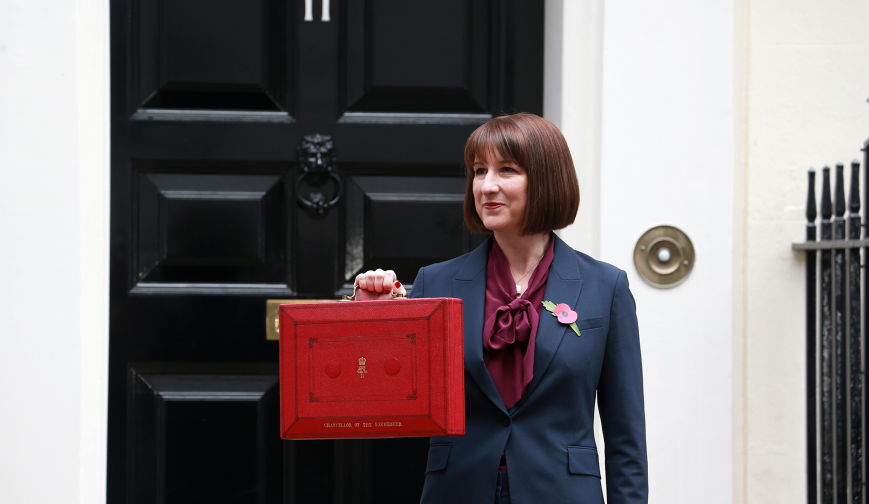
This was another big Budget. The Treasury’s scorecard contained seventy-five separate new measures. There were meaningful increases in tax, spending, and borrowing.
I’ll leave my colleagues to walk through the details, but here I’ll sketch out the highlights.
It’s worth starting with the changes to the economic forecasts, since this is where the big news was yesterday. There have been months and months of speculation about how Rachel Reeves would respond to a significant deterioration in the economic forecasts. How she would respond to the fiscal repair job that the OBR would hand her.
Yet, in the event, there was no big fiscal repair job.
There was a material downgrade to the OBR’s medium-term productivity forecast.
There was also a chunky increase in forecasts of various aspects of public spending.
Yet the overall forecast downgrade was minimal. That’s because the Chancellor was saved by a stonking increase in the forecast for tax receipts. Before the Chancellor did anything, even with a productivity downgrade, receipts were forecast to be £16 billion higher in 2029-30 than previously forecast. Rachel Reeves was unlucky to be the person in charge when the productivity downgrade came. But she also got very lucky with the forecast on revenue.
A big chunk of that higher revenue – some £14 billion – comes from higher inflation, which is very good for the public finances when every tax threshold under the sun is frozen in cash terms. This is fiscal drag in full force. Another chunk comes from the OBR’s judgement that growth will be concentrated in parts of the economy that we tax more heavily. There’s no sign of these extra tax receipts in the outturn data for the seven months of the year so far, but the OBR thinks they will ride to the Chancellor’s rescue. I’d call that lucky indeed.
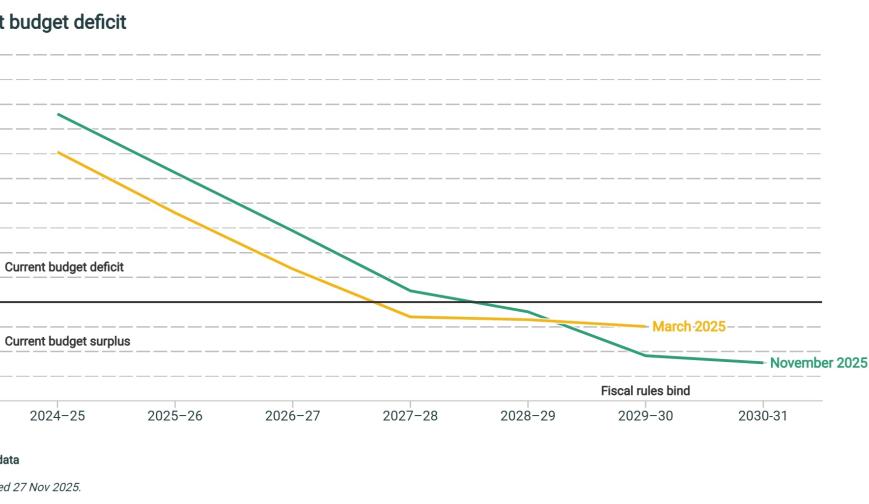
Put all of this together and the result was only a £6 billion downgrade in the borrowing outlook. That is: before any policy measures, Rachel Reeves was forecast to be running a small current budget surplus in her key year of 2029–30 and therefore meeting her fiscal rules. No fiscal repair job needed. Even after accounting for the U-turns on winter fuel payments and disability benefits since the spring, she was running only a very small deficit. This was news.
So, having been handed a slightly-worse-than-last time, but definitely better-than-expected forecast , what did she do?
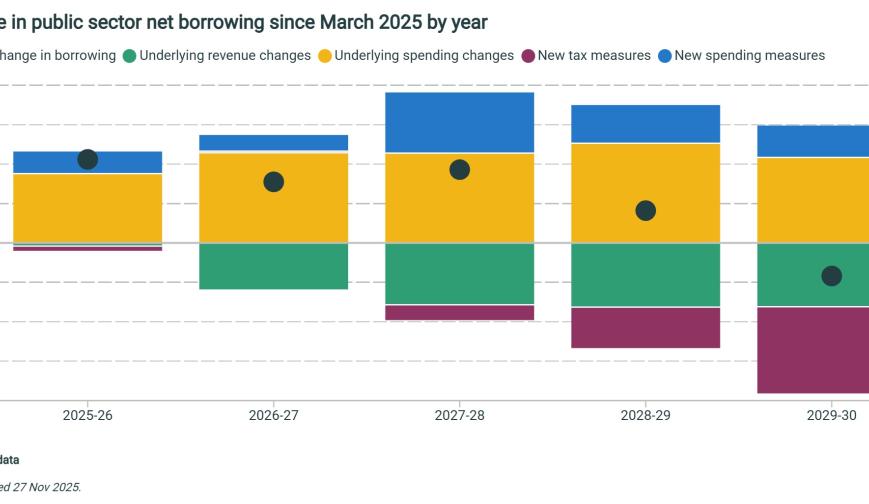
In short, she raised spending, and she raised taxes. There’s more spending than taxes for the next three years, meaning higher borrowing. After that, the tax rises are larger, delivering an increase in the Chancellor’s ‘headroom’ from a paltry £10 billion in the March forecast to around £22 billion this time around. It was a borrow-to-spend Budget in the short term, and a combination of a tax-and-spend and tax-and-bank-it Budget in the medium term.
The decision to increase her headroom, when she didn’t strictly need to, deserves credit. It means that it will require a larger shock to blow the Chancellor off course. This in turn should mean that we can expect a period of greater stability and more muted policy speculation. And we really should all hope for that. The Chancellor is also hoping to reduce policy volatility by removing the formal assessment of the fiscal rules in the spring – though the OBR will still be producing a forecast, and you won’t need to be an IFS-trained wonk to be able to read the spreadsheet and work out if things are still on track.
Four spending stories
Zooming in on the increased spending, there were four big stories. The first was the decision to abolish the two-child limit from next April onwards. That will eventually cost around £3 billion per year, benefit 560,000 families to the tune of more than £5,300 per year on average, and reduce child poverty by 450,000 .
The second was on welfare more broadly. The forecast for welfare spending in 2029-30 was revised up by £16 billion, around £9 billion of which was because of the two-child limit and policy U-turns since the spring. The rest came from higher inflation, more unemployment, more disability benefit claims, and other moving parts. These pressures were accommodated.
The third spending story was in relation to support for children with special educational needs. SEND spending has been hurtling upwards and leading councils to accumulate eye-watering deficits as spending – based on legally-mandated entitlements – continually runs ahead of the funding provided. New data mean that the OBR now expects this spending to rise by 14% in real terms this year alone. The system is a total mess. But there was progress at the Budget: thanks to new OBR powers, we now have an official forecast for SEND spending pressures, where previously we had been flying blind. The other big change is that central government will, from 2028-29, take responsibility for funding high-needs spending in full. That will take pressure off of councils and should sharpen minds in Whitehall to tackle the challenges. What’s needed now is for the government to first set out and then deliver on plans to reform this system.
The fourth spending story is that the Chancellor pared back her spending plans for later in the parliament. The government now claims that day-to-day departmental spending will only rise by around 0.5% per year in real terms in both 2028-29 and 2029-30, down from around 1% per year. The lower spending will come, we’re told, from efficiency savings above and beyond those built into the spending plans published back in June. This is quite a big deal: £4 billion, or one-third, of the government’s additional headroom comes from this change. All will be revealed at the 2027 Spending Review. Perhaps the government really will be able to find new efficiency savings. Or, maybe, when the time comes, and as the election looms, it will find that the spending plans are unrealistically low.
Everyone ‘contributing’ more
Turning now to tax, Rachel Reeves said she wouldn’t come back for more. She clearly did.
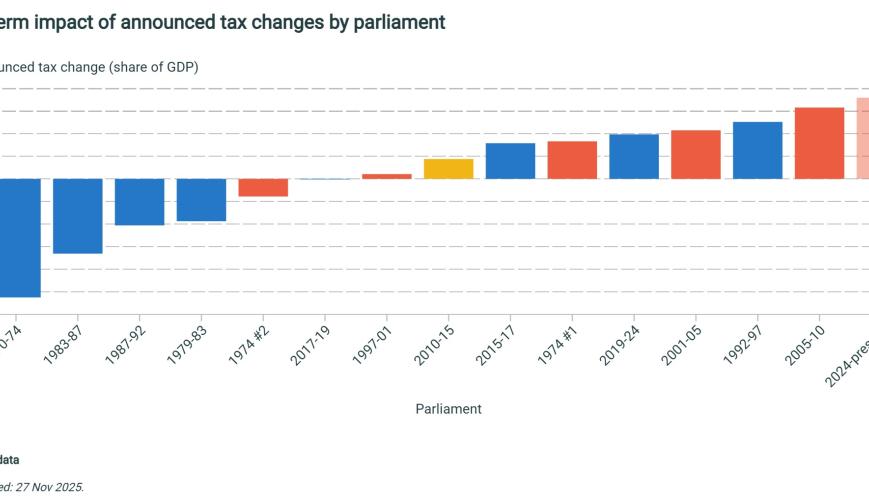
Tax revenue will be £38bn higher at the end of the forecast period in 2029-30 than it was forecast to be back in March. £16bn of that is the underlying improvement; £22 billion is the net yield from policy measures.
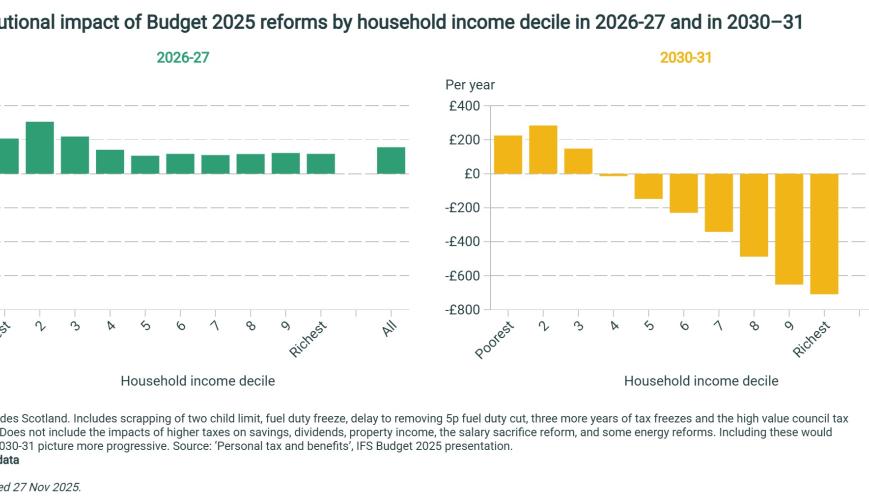
The single biggest measure was a further 3-year freeze in personal tax thresholds between 2028 and 2031. A key feature of this measure is that no one knows how much it will raise or how big the effects will be on taxpayers. The structure of the tax system has been left to the vagaries of future inflation. Under current inflation forecasts, the fiscal drag during those years will mean around 700,000 more people paying any income tax, and 1 million more people paying a higher rate. By 2029 more than a quarter of all taxpayers are expected to be higher- or additional-rate taxpayers. For a basic-rate taxpayer the freezes will mean £220 more tax per year; for a higher-rate taxpayer it rises to £600 more per year.
Looking beyond the threshold freezes, there were many other tax measures. There are two themes.
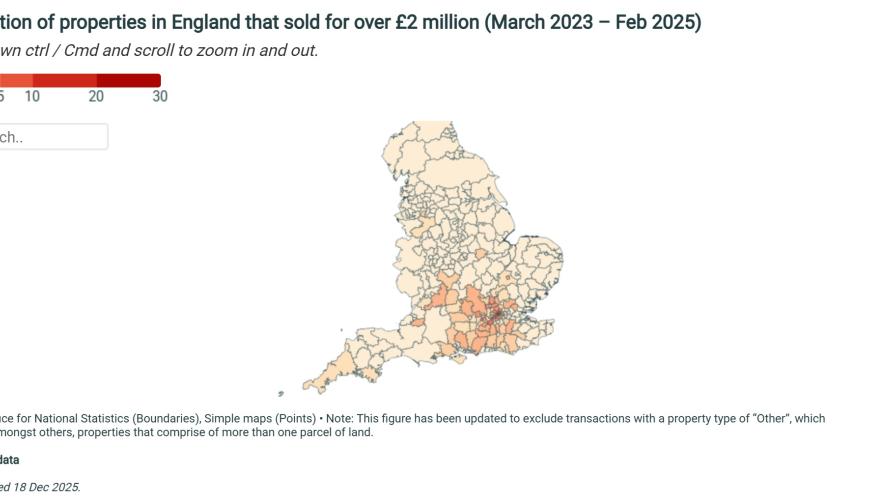
The obvious one, and the one that the Chancellor was keen to point out, was that they are skewed towards people with higher income or wealth – most obviously in the ‘mansion tax’ and higher income tax on savings, dividends, and property, but the salary sacrifice reform and tax threshold freezes are also tilted towards the top.
I think there’s another theme related to tax reform: in a number of areas, the government has identified things that it sees as a problem. That’s a good start. It has announced some policies that, it could be argued, are steps towards fixing the problems. But they are baby steps and they stop well short of anything that looks like proper tax reform.
Here’s what I mean:
The government correctly identified that problems arise because employment income is taxed at higher rates than investment incomes. This – at least partly – motivated the increased taxes on dividends, interest income and property income.
What the government didn’t highlight is that the tax base for these taxes – what they’re actually levied on – is flawed. Because that base is left unchanged, this change does more to damage to savings and investment incentives than is needed. With reform of the tax base, we could have higher rates with less damage to saving and investment incentives.
On property, the government correctly identified that council tax is unjustifiably regressive. It has found a way to start to change that by adding higher taxes at the top. Properties – at least high–value ones – will finally be revalued. But those new valuations won’t be used for council tax. We will now have two property taxes based on different valuations. And people ask why our tax system is too complex – one reason is because it’s often seen as easier to add something than to fix what we already have.
Here's another problem the government identified: the long-term decline in fuel duty receipts.
It has found a neat way to undo the ‘temporary’ 5p cut to fuel duties. That’s to be commended, if the plan is carried through. Although it has also continued the absurd practice of freezing the ‘permanent’ rate of fuel duties for another year while saying that it will rise with inflation in future.
On the topic of driving, the government also chose to introduce a new per-mile tax on driving electric cars. Credit to them for tackling the long-deferred question of how to tax electric cars. But the main reason to have such a tax is to reflect the major cost associated with driving: congestion. What we've got is a tax per mile, whether that's a mile driven through a city centre at rush hour or an empty motorway at 2 in the morning. That’s a very poor substitute for a tax that is actually linked to congestion.
Baby steps.
The move to cap tax breaks on salary sacrifice pension contributions was cited as a means to ‘increase fairness’. Salary sacrificed contributions are strange in that they walk and talk like employee contributions but get the tax breaks that come with employer contributions. Capping those tax breaks is effectively moving a boundary in the tax system and adding some complexity. It’s hard to see this as principled reform to the tax treatment of pensions, not least because the government gives no indication of why it thinks there should be such a gaping tax difference between employer and employee contributions in the first place.
That aside, some will also be interested to note that, as a result of both this measure and the threshold freezes, National Insurance will increase. I would call that a breach of the manifesto.
Before we move away from tax, changes to the taxation of energy are worth a mention. There are lots of knotty details here. But let me give you the takeaway. The government said that the measures it is introducing will save households £150 per year off their energy bills. While it has given some substantial tax cuts on energy bills over the next few years, the longer-term offerings are much more paltry, cutting only £39 per year off bills from 2029–30 onwards.
Assessment
Let’s step back. This was undoubtedly a big Budget in terms of the numbers involved. How could it not be when tax revenues are now £38bn higher in 2029–30 than previously expected? But it’s not a Budget that feels particularly big on ambition . At least not relative to the scale of the challenges we face.
Perhaps as an indication of that, I expect that this Budget will be remembered not for any of its policy measures but for the surrounding process, which is unlike anything I have ever seen. Unprecedented levels of briefing and speculation that was bad for growth and sucked the life out of more important debates. All about a fiscal repair job that didn’t exist. And all topped off by an accidental leak from the Office Budget Responsibility that allowed us to see the main shape of the Budget before the Chancellor even got to her feet. This was not a Budget process to repeat.
I don’t want to be too negative about the Budget itself. There are bright spots. The increase in headroom, a plan for how to tax electric cars, more transparency on SEND costs – all of these decisions, and some others, deserve credit. And for a government aiming to reduce measured child poverty, scrapping the two-child limit is a cost-efficient means to do so.
But, beyond that, I can’t help but feel underwhelmed. The fiscal forecasts are predicated on spending plans that would involve near-heroic restraint in an election year, and a back-loaded set of tax rises that almost entirely delay the pain. It’s reminiscent of the fiscal fictions of recent years. I hope this is a government able to deliver on its plans. But I have my doubts.
Bigger picture: the government said that growth was its number one mission. It was right. It should be.
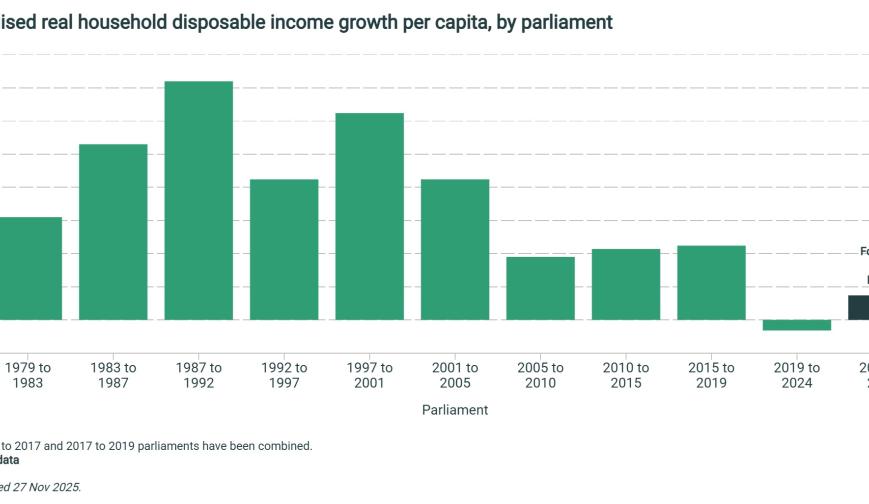
Before this Budget, the UK was faced with lacklustre economic growth, stagnating living standards, and a dizzying array of fiscal pressures. The same is still true after this Budget.
The OBR forecasts that average disposable incomes will only grow by about half a percent per year this parliament. This is truly dismal, especially when compared to the more than 2% per year we achieved across every parliament from the mid-1980s to mid-2000s.
Growth not only makes us richer, it makes almost every problem easier to solve. At the last Budget the Chancellor said, “Every Budget I deliver will be focused on our mission to growth the economy”. That wasn’t on show yesterday.
It was never going to be possible to do such a large tax rise and have that be good for growth. But – and I am fully aware that I sound like a broken record here – tax reform was the way to ensure that taxes don’t do more damage that necessary. The Chancellor, like her predecessors, continues to shy away from meaningful tax reform that could move the dial. This felt mostly like the Budget of a government trying to scrape through. Of course, no fiscal event can do everything, and reform is hard. But given the scale of the challenges we face, and given the government's lofty rhetoric about change, and its ambitions on growth, I think we're entitled to ask for more.
Let’s all hope that we now get a period with less speculation about what the Chancellor might have to respond to next. And therefore a period in which the government can devote its bandwidth to the challenge of how to boost productivity and growth – without higher growth there will be plenty more tough Budgets to come.